
Blog How are Hand Woven Carpets Produced and What are the Procedures?
The journey of a carpet begins with the idea first. Designers specify a concept and determine the compatibility of the type of yarn that is to integrate with pattern and color.
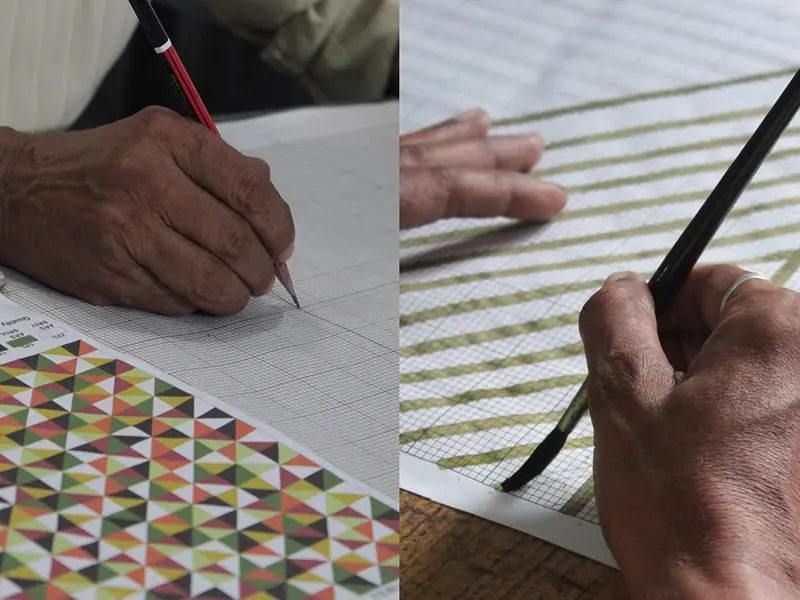
The journey of a carpet begins with the idea first. Designers specify a concept and determine the compatibility of the type of yarn that is to integrate with pattern and color. Artists convert the draft, which they draw by hand, into a computer-supported drawing. Designs are transferred to graphic papers and each frame in the drawing represents a knot tied in the carpet. It is then dyed in order to indicate the details in the tones. All details are notified to weavers and production begins.
Yarn dyeing
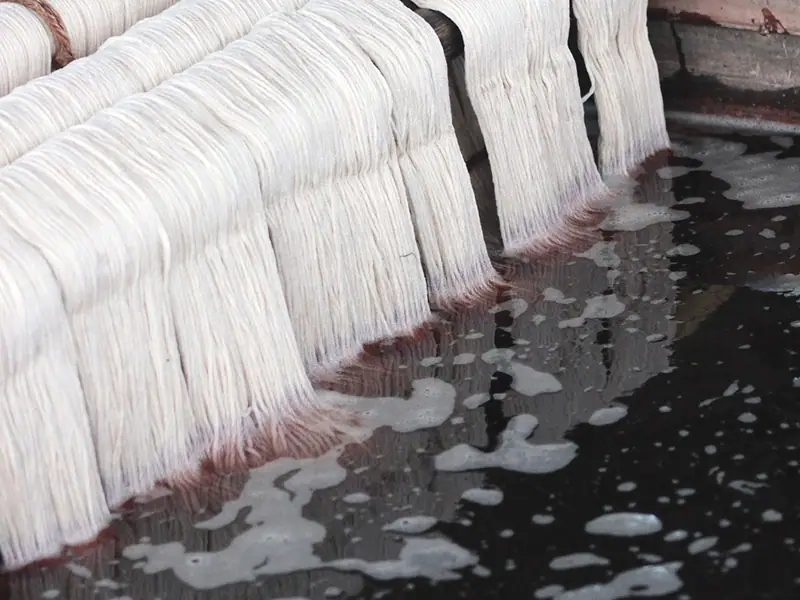
To dye yarns, they are placed into a large container and they are repeatedly dipped into dye at regular intervals to ensure uniform color. The yarns are kept in hot dyeing water for a long time and after the desired tone is reached, the yarns are washed in sunlight and dried.
Knotting the carpet by hand
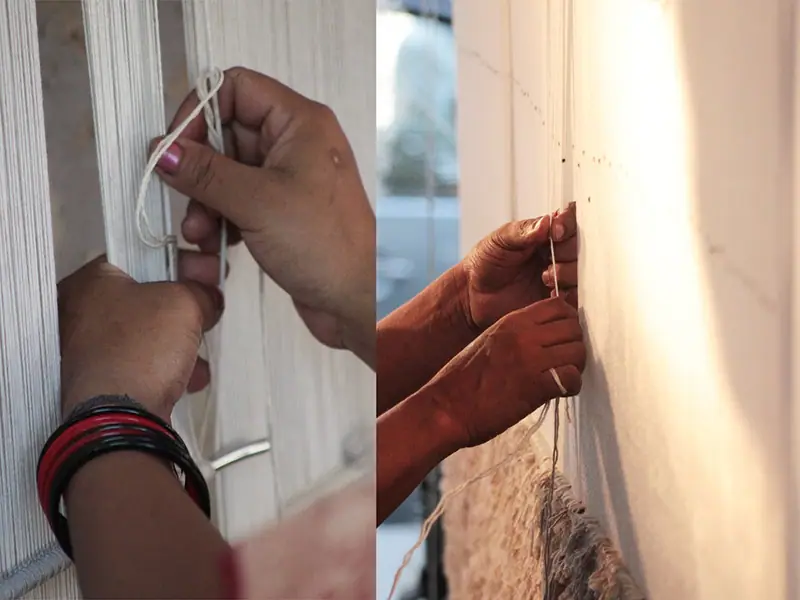
Depending on how large the size, design, and pattern of the carpet are, the weaving process of a fine hand-woven carpet may take several months. The types of yarn, by which the best results are obtained in hand-woven carpet production, are cotton, silk, and wool.
The finishing operation
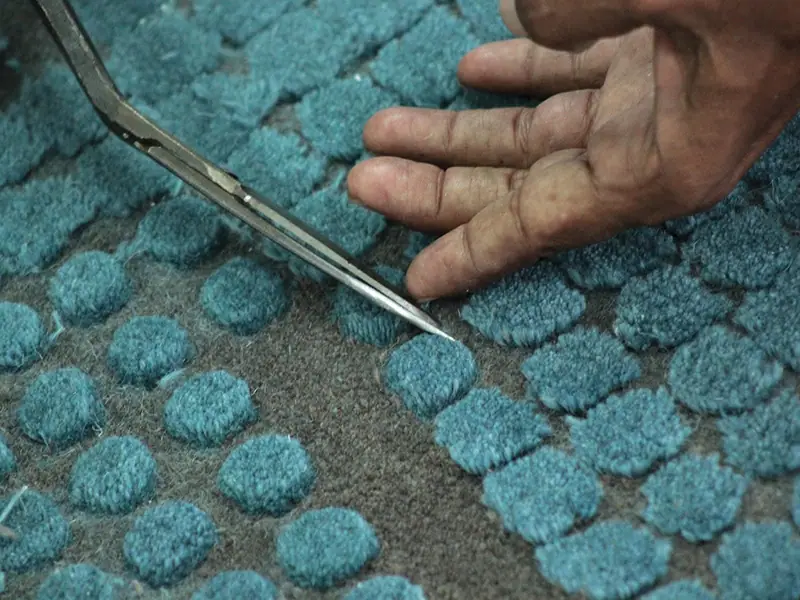
The carpet, weaving of which is finished, is removed from the loom and excess yarns are cut using scissors. The details of the carpet such as color and pile quality are checked. Furthermore, after the carpet is woven, the gaps between the patterns are corrected by qualified craftsmen; they align the pile of the carpet.
The carpet cleaning operation
Carpet is washed by immersion in water. It is squeezed to remove dirt and residual dye. In this way, the carpet is washed several times until all dusts, detergents, dirt, and yarn particles are removed. Then the carpet is kept in the sunlight until it is completely dry to balance the colors of the carpet. In addition, with different carpet washing techniques, vivid color tones can be created.