
Blog History of the Carpet
Since the ancient times, man has used a variety of means for uncomfortable floor or floor surface where he walks, sits, and sleeps.
Even before the recorded history, animal skins and furs were used for this purpose. Over time, various natural and fabricated materials have been used to provide a better level of comfort and durability.
With the domestication of animals, the trust in using fur for flooring diminished and use of woven material for this purpose increased.
This fluff carpet, which is known to be the oldest in the world, is wool and dates back to 5th - 4th century BC, and it is named as "Pazirik carpet" because it was found in Pazirik Valley. This carpet was found by Sergei Ivanovich Rudenko during an excavation carried out in a Siberian mound in 1949. It is said that the origin of this carpet dates back to the Turkic communities, Scythians, or Persians living in Siberia.
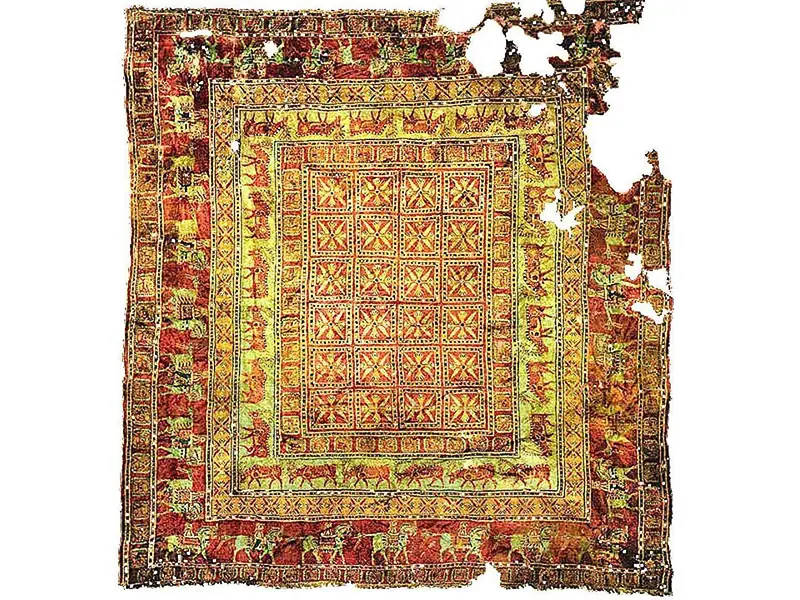
Over centuries, gradual development in weaving and evolution in design have led to more elaborate patterns. At the beginning of the 8th century BC, affluent families often adorned their homes with diligently woven, splendid, and historically important carpets.
Although weaving has been common in many parts of the world, each ethnic group has produced quite different designs for different purposes. Carpet and carpet making in the Middle East has become a home industry where individuals make carpets for their own use. They would produce these carpets for many different purposes and use them as a payment for goods and services. Carpets were also being used as payment for dowry, animals, or taxes. In India, however, carpets were almost exclusively being woven for Mongolian rulers and they would not enter into the daily lives of ordinary people. Handmade carpets in China would be produced for those of high size and richness.
At first times when carpet was used at homes, it was for the purpose of protection, floor covering, wall covering, and decoration. Besides, it was also seen as a luxury item usually used by upper classes.Then, in the 7th century, precious items of the Christian saints would be wrapped in expensive materials for shipping from the Middle East.
This was the period of the Merovingian when the heads of the European monasteries, who would go to pilgrimage from Rome, had never neglected to bring fabrics and sacred relics that are worth gold at their weights. For this reason, western artists knew Eastern motifs since the middle ages. These motifs were generally of Sasanian origin and were enriched with the magnificent mixture of Asia, early Christianity, Byzantine, and Islamic cultures.
Antique Carpets and Modern Carpets
Carpets made before 1920 are included in the antique category. However, when definitive classification is required, antique carpets are often defined as the traditional carpets produced without using chemical dyes. These were produced in the period of 1860-1870 when chemical dyes were not discovered yet.
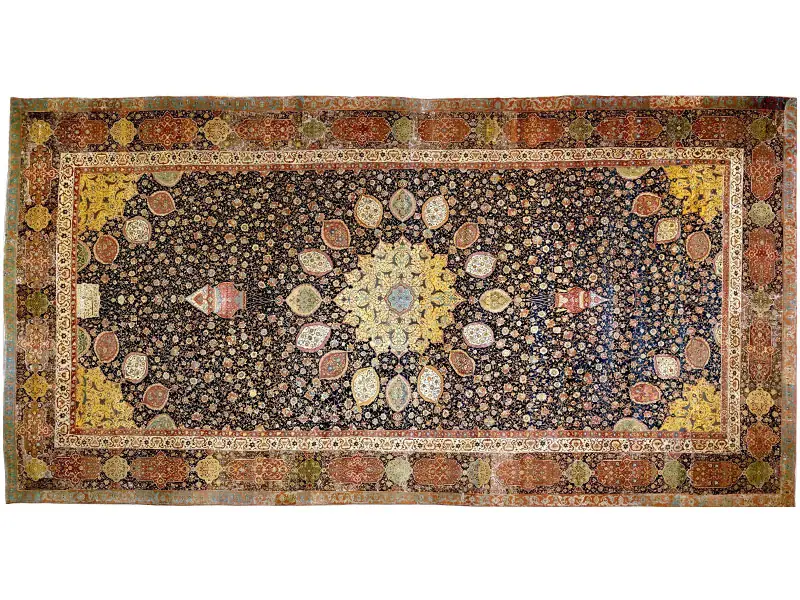
And the carpets produced from this period until the beginning of the 20th century may be called semi-antique or old carpet.
Modern carpets are those produced in accordance with the market demands made from the West since the 1920s and 1930s.